Written by: Marcello De Vitis; Reviewed by: Olga Kildisheva
To successfully implement seed-based conservation projects, such as single-species reintroductions or habitat restoration initiatives, we need a reliable supply of seeds! The supply chain for these projects is complex, encompassing several key components: from the initial collectors to the testing and storage facilities, and finally to the teams responsible for planting and monitoring. However, the entire process begins with seed collection and ensuring these seeds are available.
Consequently, a group of Mediterranean seed banks recently collaborated on a case study to assess the availability of characteristic Mediterranean coastal species. This effort was driven by the recognition that coastal ecosystems face significant threats and pressures, necessitating their urgent restoration and preservation.
The resulting study, published in the Springer Nature Journal of Coastal Conservation, provides a snapshot of the current seed banking situation for characteristic Mediterranean coastal plant species across Europe and internationally (read the full article here). This analysis is valuable because it helps to:
Highlight conservation gaps
Generate recommendations to direct future seed collection activities
Support decision-making processes in habitat restoration and species reintroduction efforts, and
Improve collaborations and partnerships amongst European and non-European organizations that store Mediterranean species.
Ultimately, this assessment increases our collective awareness of available resources and guides future conservation actions and funding necessary to better preserve and restore natural ecosystems.
This work was co-coordinated by Sara Magrini, an amazing professional and human being who dedicated her studies to the conservation of wild plants, including many Mediterranean coastal plants, and who was, among many commitments, the creator and editor of the Mediterranean plant germination reports and the past President of RIBES, the Italian Network of Seed Banks for the Ex Situ Conservation of the Italian Native Flora. Sara passed in late August, and she will be deeply missed as a friend and as a passionate expert in plant ecology and conservation. This work is dedicated to her.
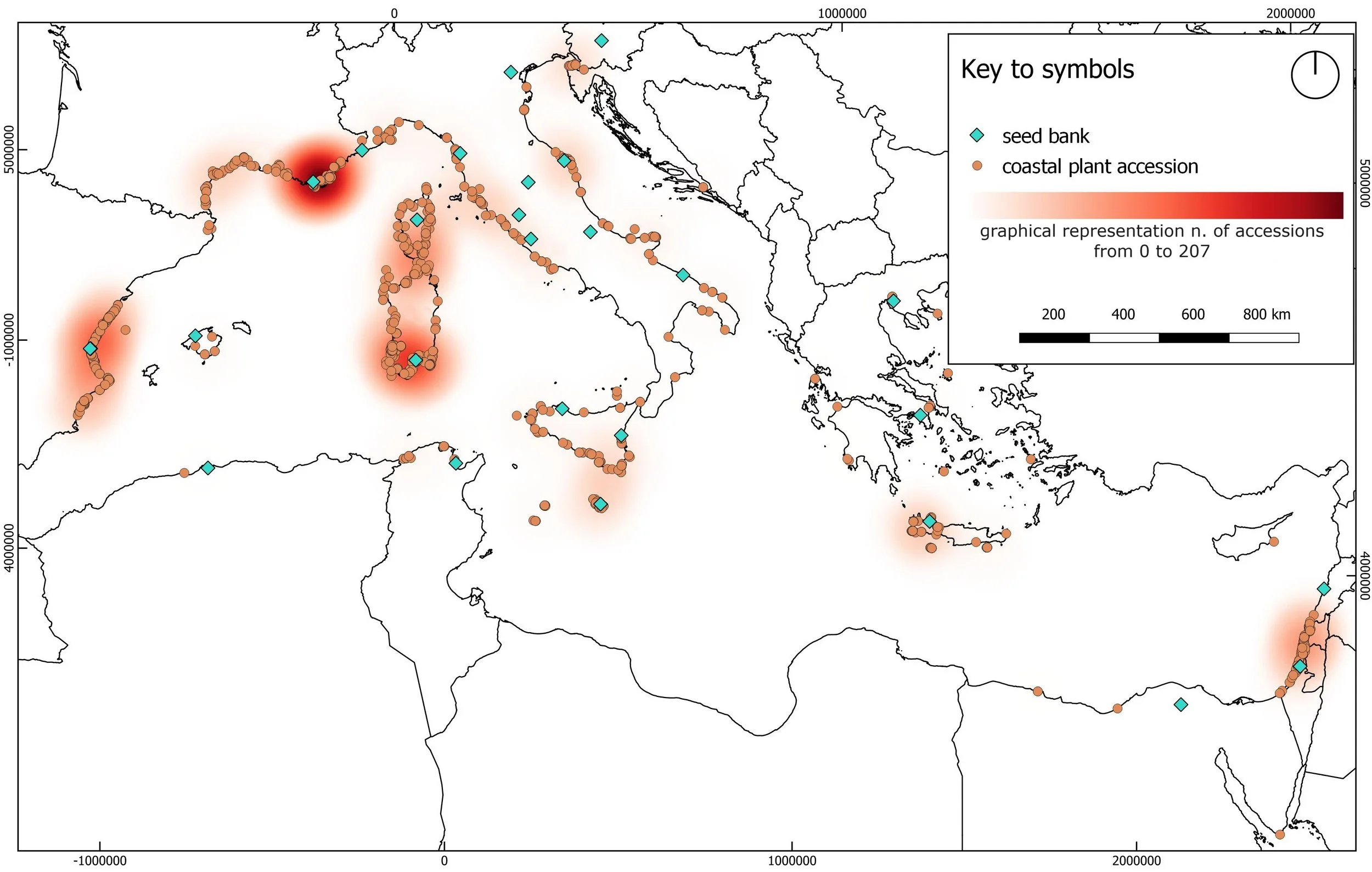
Figure 1. Map showing the location of the 28 participating seed banks and the location of the seed accessions evaluated in this paper (source: De Vitis et al. 2025, Journal of Coastal Conservation, 29, 50).
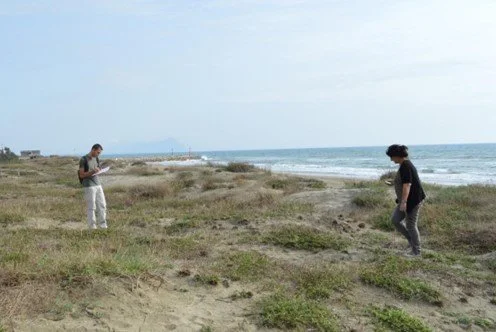
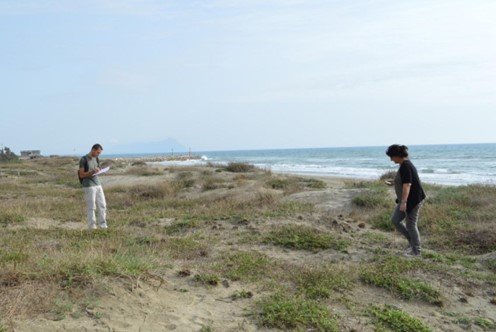
Figure 2. Marcello De Vitis and Sara Magrini, collecting seeds and data from a coastal site in Italy.