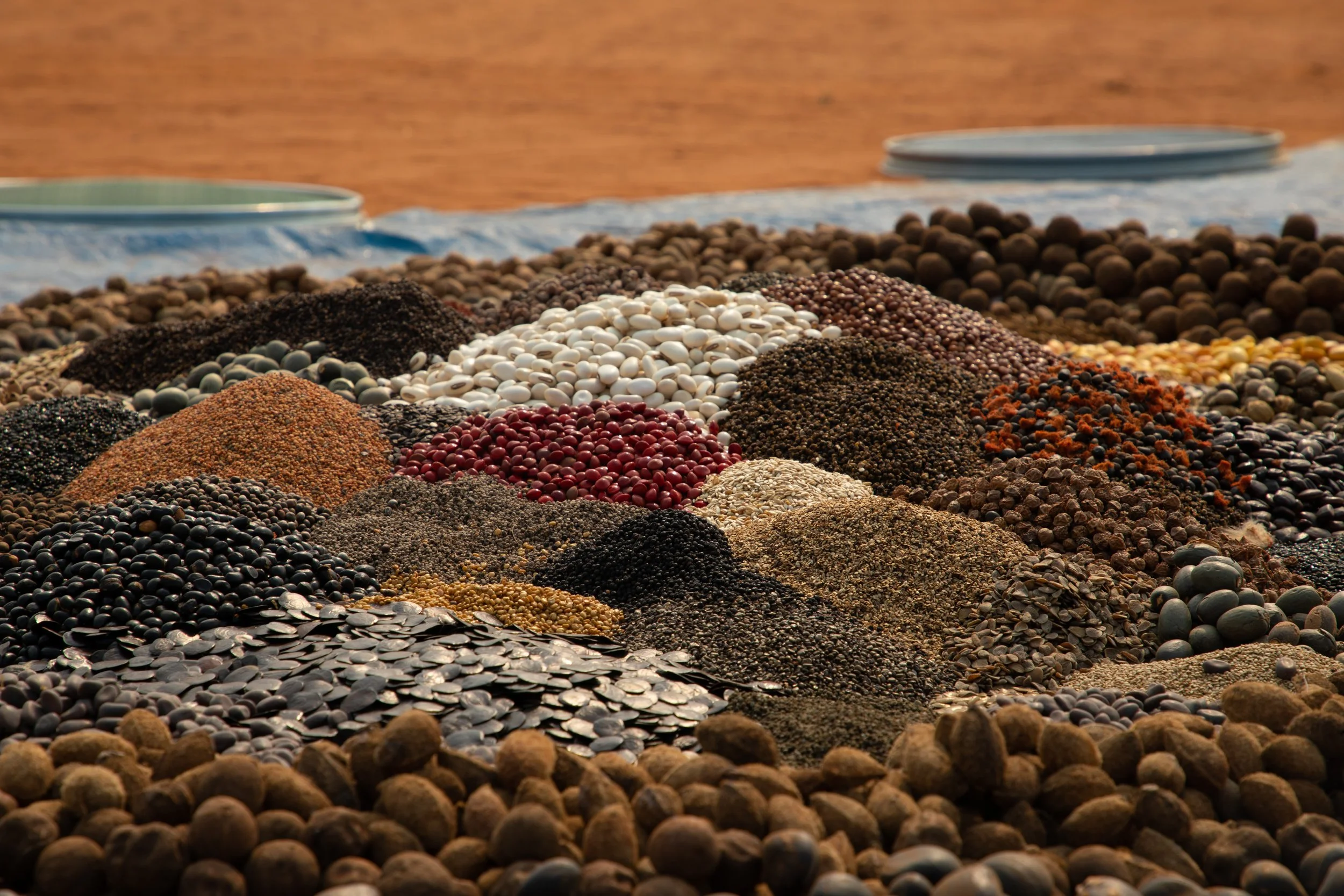
— and how they are supplying seeds for large-scale direct seeding restoration across the country
Written by: Lia Dominguez; Reviewed by: Nancy Shaw
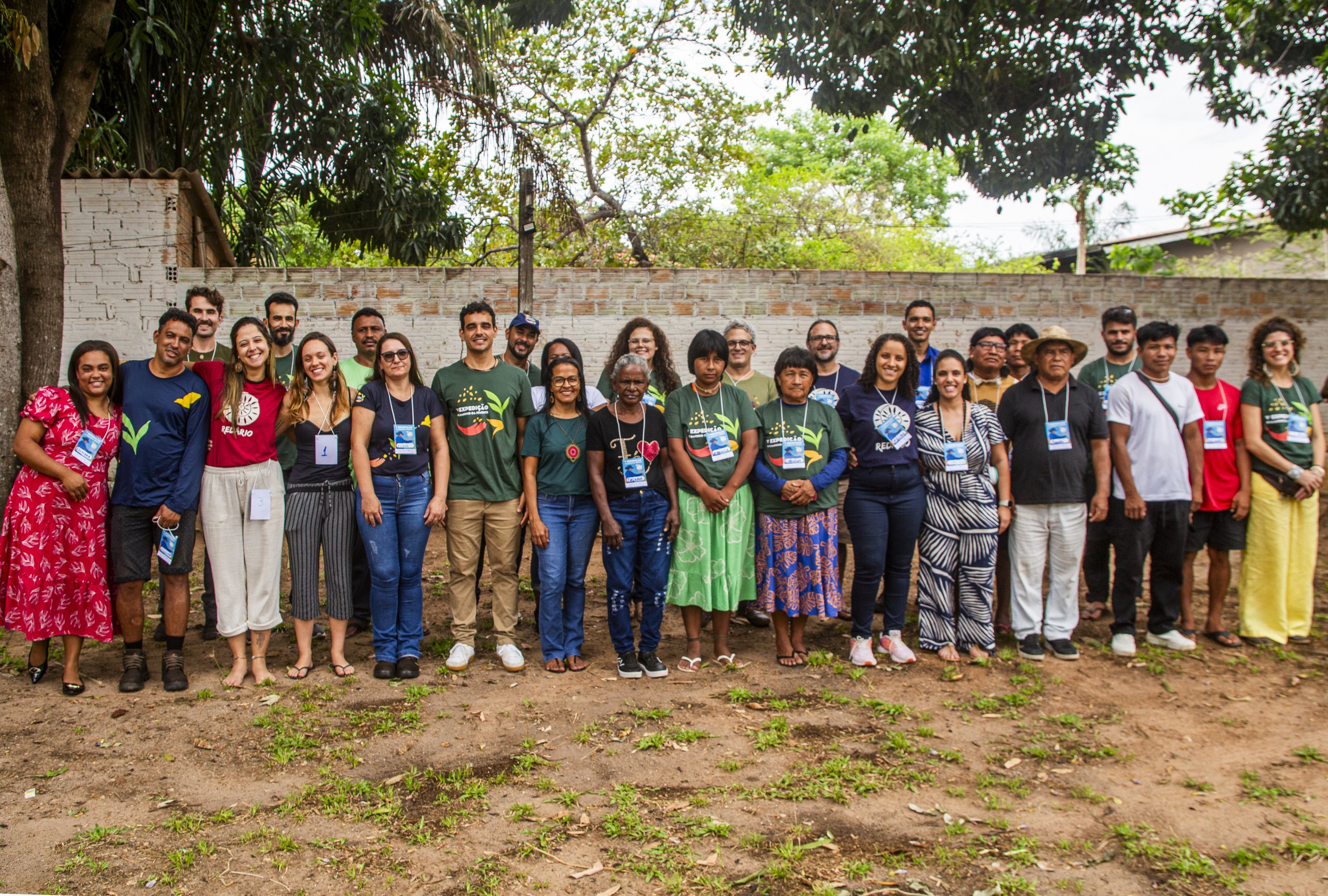
Some of the many people who make up the Xingu Seed Network during the 5th Expedition – The Path of the Seed, in October 2025. PHOTO: Bianca Moreno/RSX
You may have heard that Brazil is a global reference when it comes to ecological restoration — and that the country hosts a wide range of community-based, inclusive, and grassroots initiatives dedicated to restoring ecosystems, territories, and community relationships.
But you may not yet know that Brazil has an articulation of more than 28 community-based seed-collecting networks for restoration. Below is everything you need to read to begin understanding this reality — and perhaps even replicate some principles and ideas.
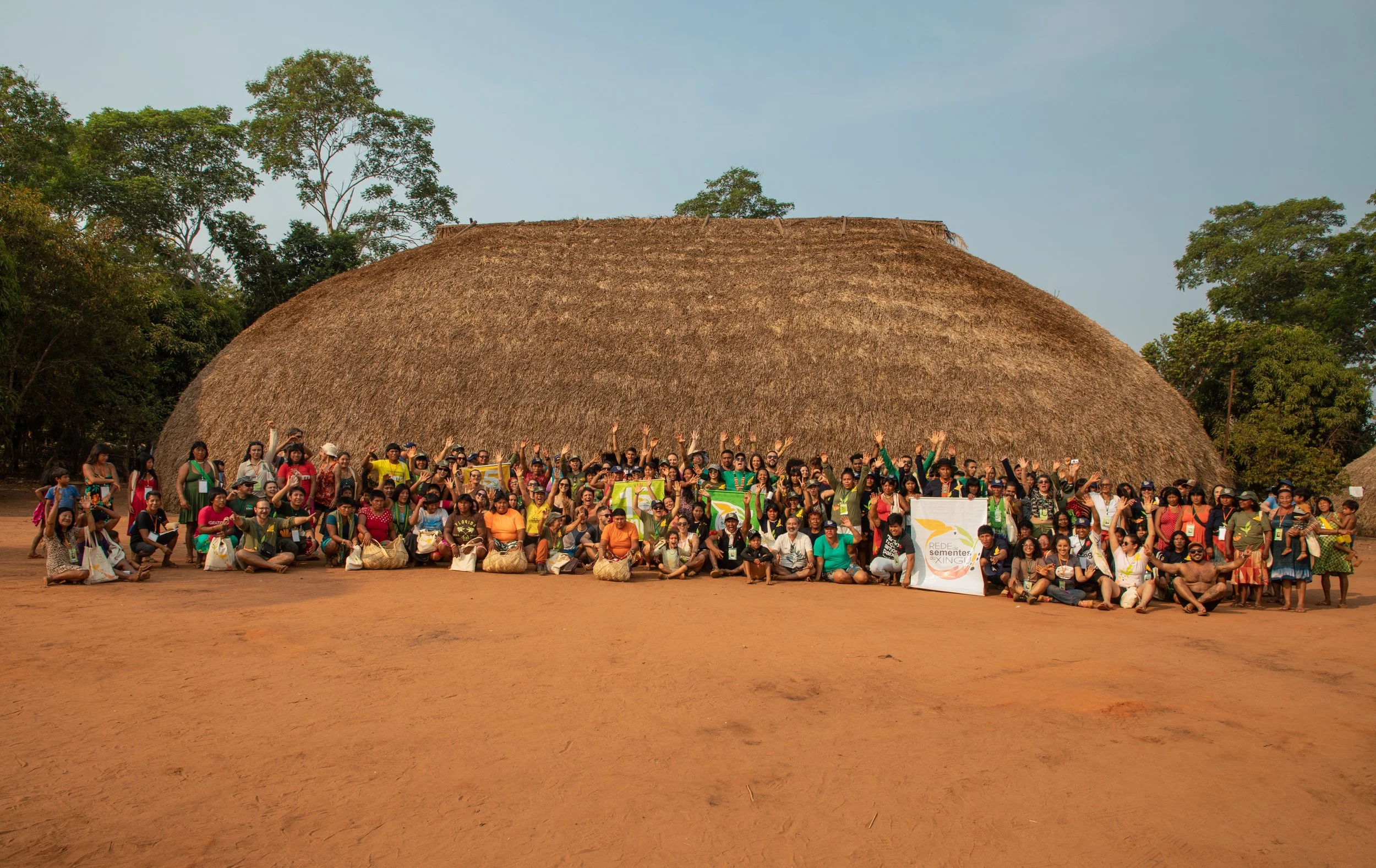
A Rede de Sementes do Xingu é formada por muitas pessoas. A celebração do seu aniversário de 15 anos na aldeia Moygu, no Território Indígena do Xingu, foi uma oportunidade de reunir parte dessa comunidade.
The Xingu Seed Network is made up of many people. The celebration of its 15rh anniversary in the Moygu village, in the Xingu Indigenous Territory, was an opportunity to bring together part of this community. PHOTO: Eric Vesch/ISA/Cama Leão
Xingu Seed Network:
the largest and most diverse of them all
Since 2023, I’ve been Head of Communications for the Xingu Seed Network (XSN) — the largest and most diverse community-based seed-collecting network in Brazil.
The Xingu Seed Network is a non-governmental and non-profit association whose mission is to promote the Good Living (Bem Viver) of traditional communities and territories in the Brazilian Amazon and Cerrado – which it does by collecting native seeds and supplying them for direct seeding ecological restoration efforts.
More than 700 people collect seeds in the Xingu Seed Network, of which 68% are Indigenous, 26% are family farmers, and 6% are urban forest gatherers. In addition, 80% of all collectors are women. These people are all inhabitants of the Xingu and Araguaia River basins, both located in the state of Mato Grosso – a state nationally known as one of Brazil’s main agribusiness hubs.
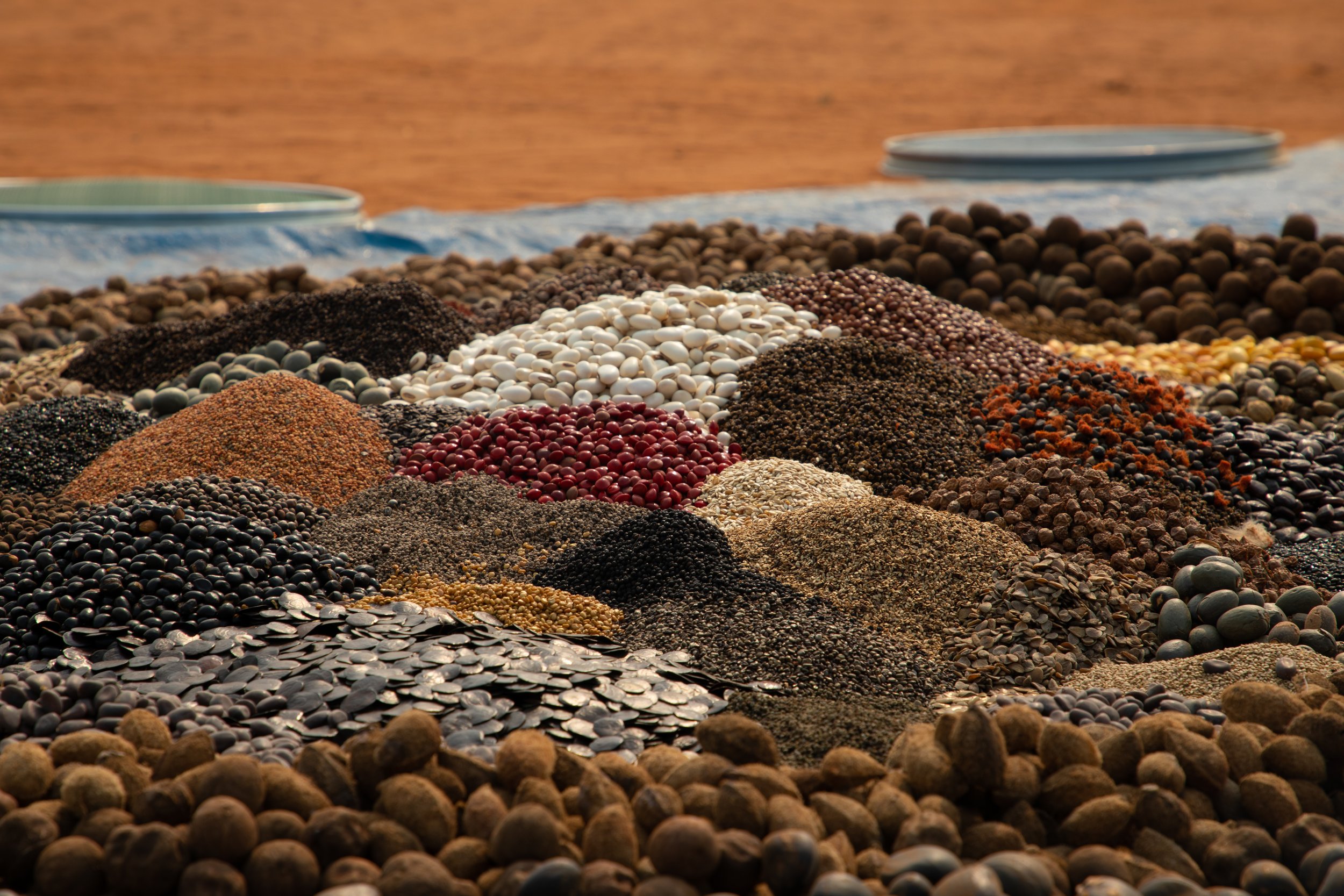
O coração da Rede de Sementes do Xingu é coletar sementes e disponibilizá-las em forma de “muvuca” para a restauração ecológica com semeadura direta: como um mix de sementes, a muvuca reúne espécies de ciclos de vida e funções biológicas diversas e complementares estrategicamente pensada para replantar uma floresta. FOTO: Erik Vesch/Cama Leão/ISA
The heart of the Xingu Seed Network is collecting seeds and making them available in thr form of “muvuca” for ecological restoration through direct seeding: as a seed mix Muvuca brings together species with diverse and complementary life cycles and biological functions, strategically designed to replant a forest. PHOTO: Erik Vesch/Cama Leão/ISA
With 18 years of history, the Xingu Seed Network has an annual collection capacity of over 45 tons across of more than 130 species — although the market is only able to absorb about 60% of this potential.
This means that the Network, like other community seed-collecting initiatives in Brazil, does not engage all available collectors nor collect everything it could simply because market demand is not yet high enough. This topic deserves its own post – which should come soon.

Since 2007, the Xingu Seed Network has collected more than 410 tons of seeds from over 220 species. The seeds collected have already enabled the restoration of over 12,000 hectares of degraded land and generated roughly R$ 9.5 million in income for seed collectors. PHOTO: Erik Vesch/Cama Leão/ISA
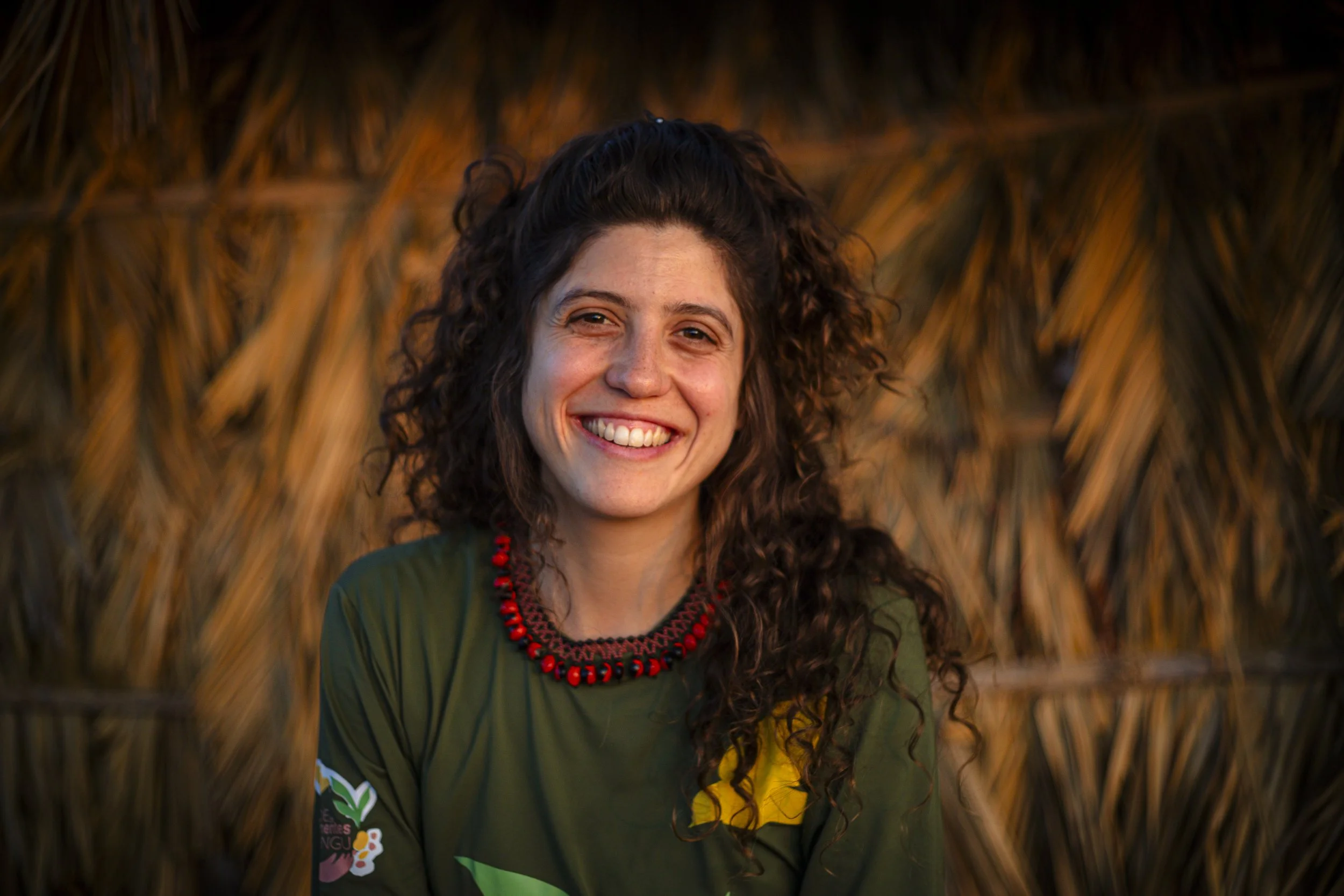
PHOTO: Bianca Moreno/RSX
About the author
Lia Rezende Domingues has been Head of Communications at the Xingu Seed Network since 2023. She is also a Community Fellow at the MedLab UC Boulder and an Ambassador for the International Network of Seed Restoration. As a journalist, socio-environmental communicator, writer, and sustainability designer, she has been researching and experiencing life in traditional communities and territories across Brazil since 2018. Author of two published books, Lia loves moving through and connecting with people, places, beings, and memories.