The launch of the Indigenous Program for Ecological Restoration (PIRE) is a milestone for Brazil's national restoration agenda – and, around it, a movement of exchanges, gatherings, and trainings further strengthens the struggle for free and living territories
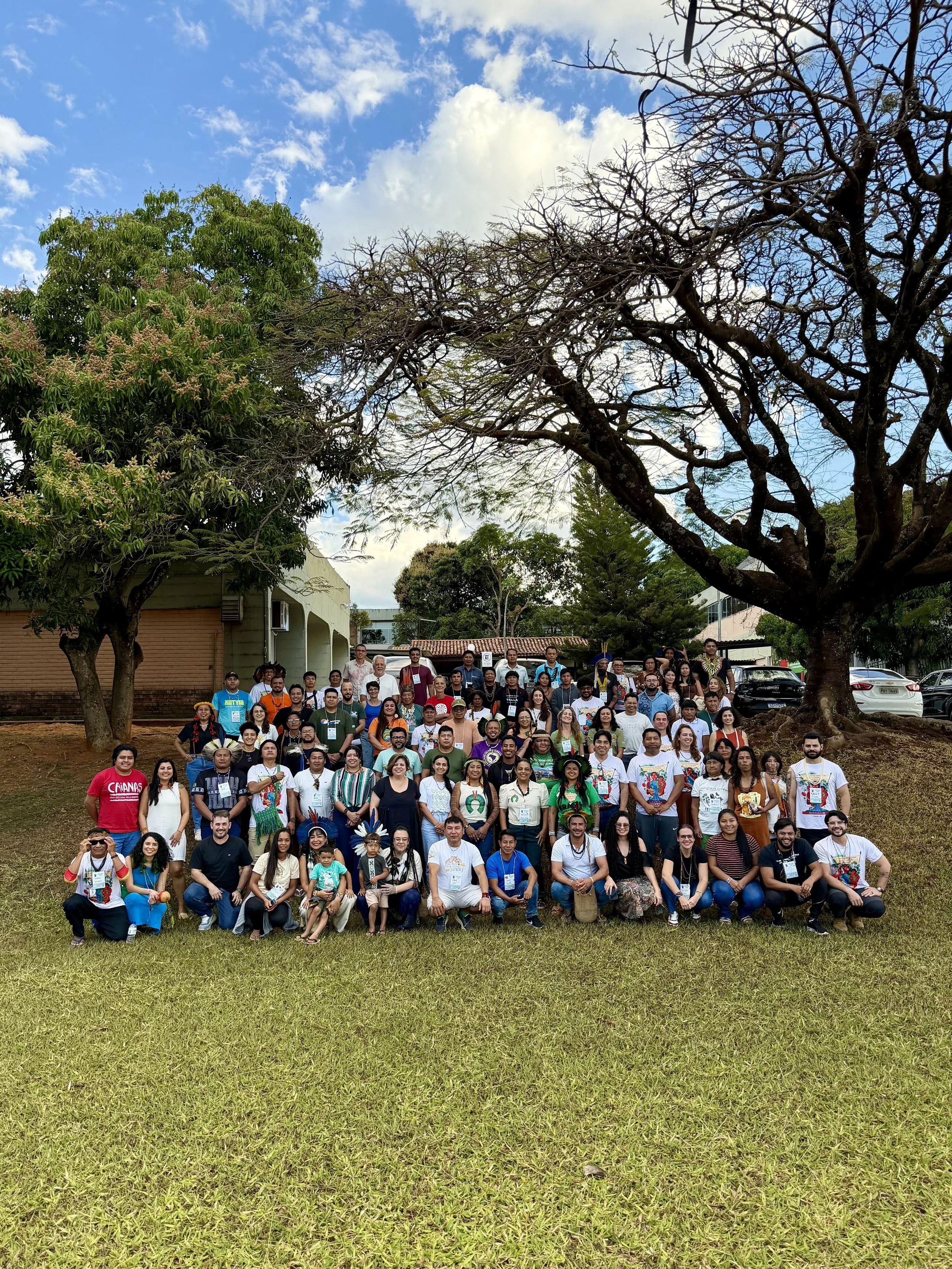
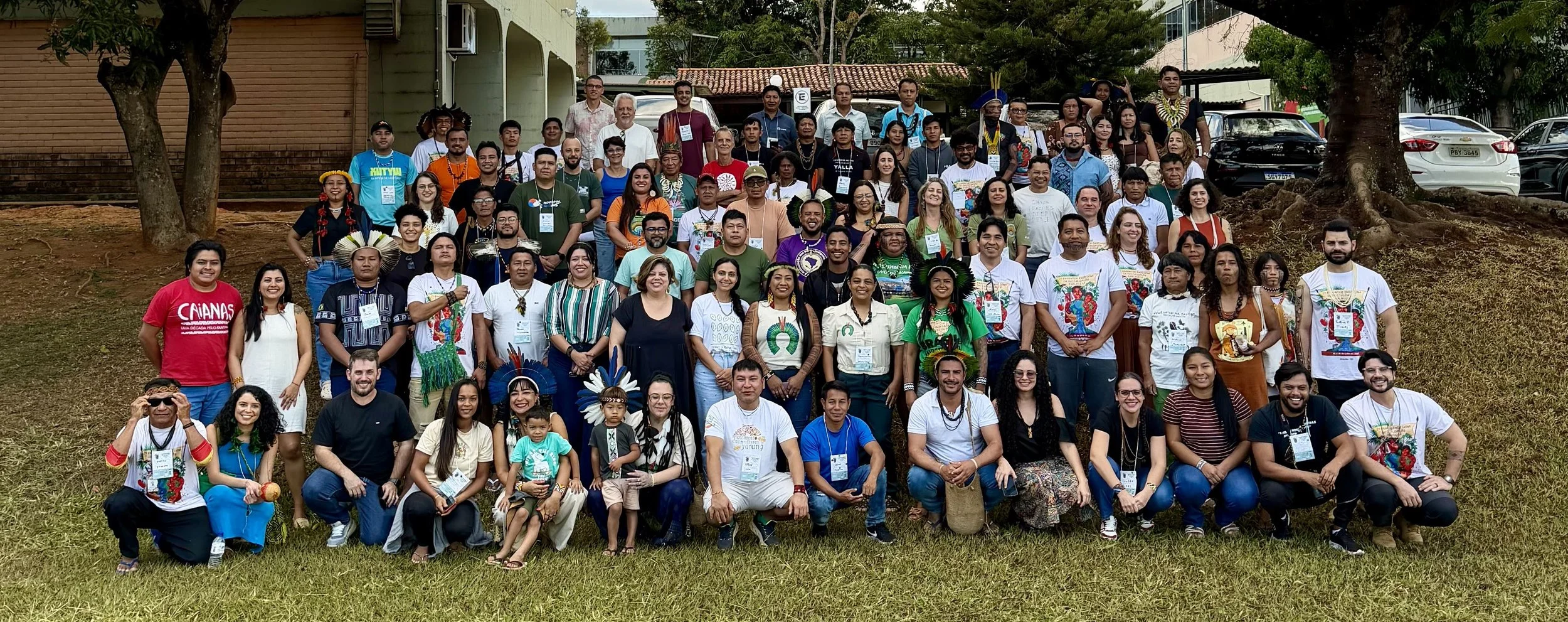
Figure 1. Participants of the II Indigenous Meeting on Ecological Restoration (EIRE), promoted by Brazil's National Foundation for Indigenous Peoples together with supporters and partners, in July 2026, in Brasília, Brazil. Photo: Lia Domingues/Xingu Seed Network
More than 80 Indigenous peoples, representing 28 different Indigenous communities from all Brazilian biomes, gathered in late July 2026, on the eve of the country's largest ecological restoration conference (SOBRE2026), to discuss the Indigenous strength within Brazil's ecological restoration agenda.
The gathering I’m talking about is the second edition of the Indigenous Meeting on Ecological Restoration (EIRE), which took place in Brasilia, Brazil's political capital, on 25–26th July 2026. The event is part of a much broader umbrella: the Brazilian Government, through the National Foundation for Indigenous Peoples (FUNAI), is close to launching its first Indigenous Program for Ecological Restoration (PIRE).
The invasion of the original territories of what is now called Brazil began as early as 1500 – and continues to this day. Since then, Native communities that occupied this vast continental expanse had already been practicing restoration both by seeding and managing the Amazon. This means we are somewhat late in creating a program like PIRE – but, as we say in Brazilian lands: "better late than never."
Below, I share four powerful lessons that, even weeks after the II Indigenous Meeting on Ecological Restoration (EIRE), continue to reverberate in me.
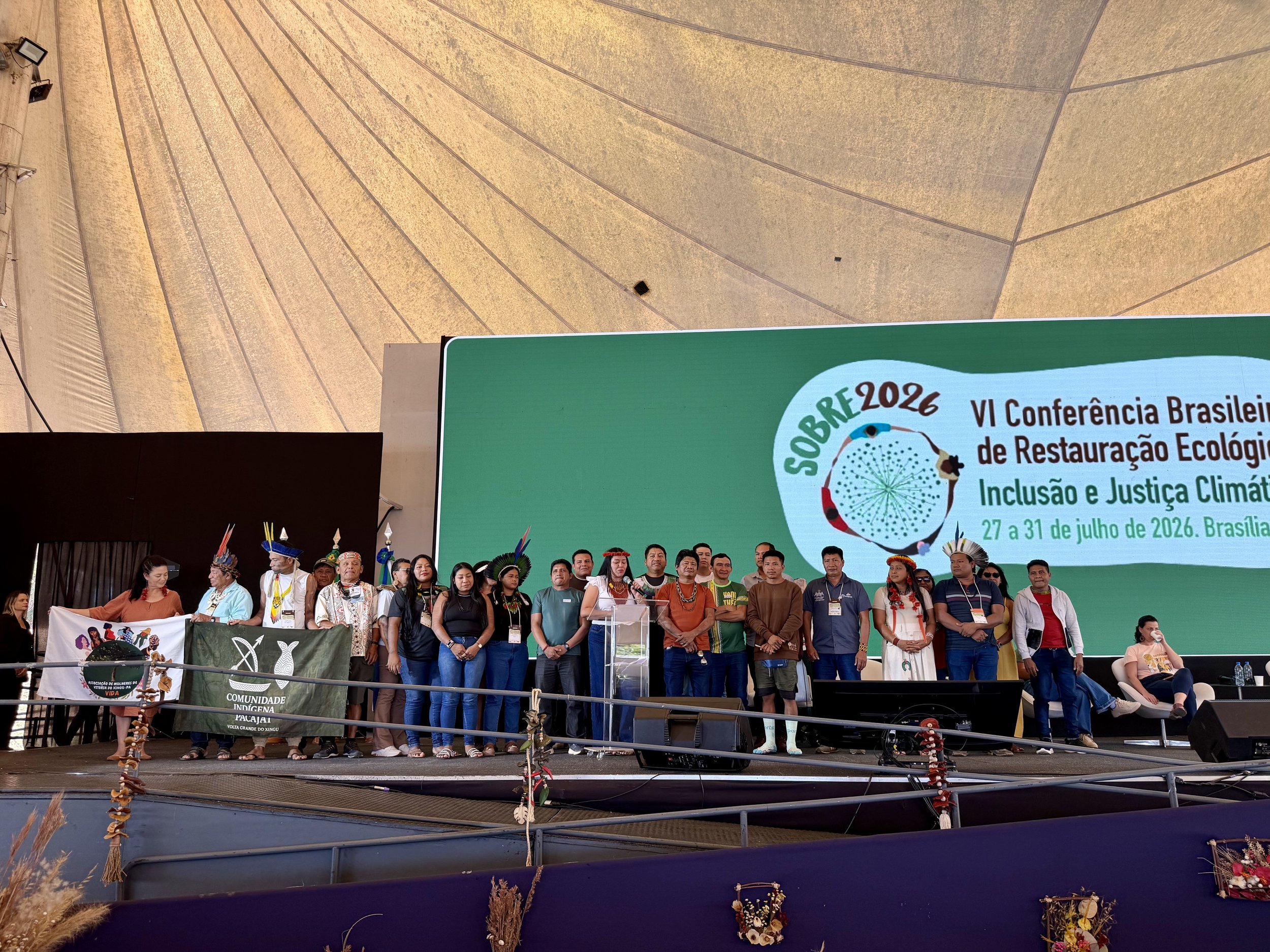
Figure 2. The second edition of EIRE took place on the eve of SOBRE2026 – the Brazilian Conference on Ecological Restoration, which corresponds to SER in Brazil. The union of the two agendas brought gains for everyone: on the one hand, relatives from all biomes had the opportunity to participate in this great conference, which brought together more than 1,800 people in Brasília. On the other hand, this same conference was never so diverse: headdresses, feathers, and maracas shook the academy with the science of the invisible. Photo: Lia Domingues/Xingu Seed Network
Lessons that remain: 4 takeaways from the conference
1. Is "ecological restoration" really the best expression?
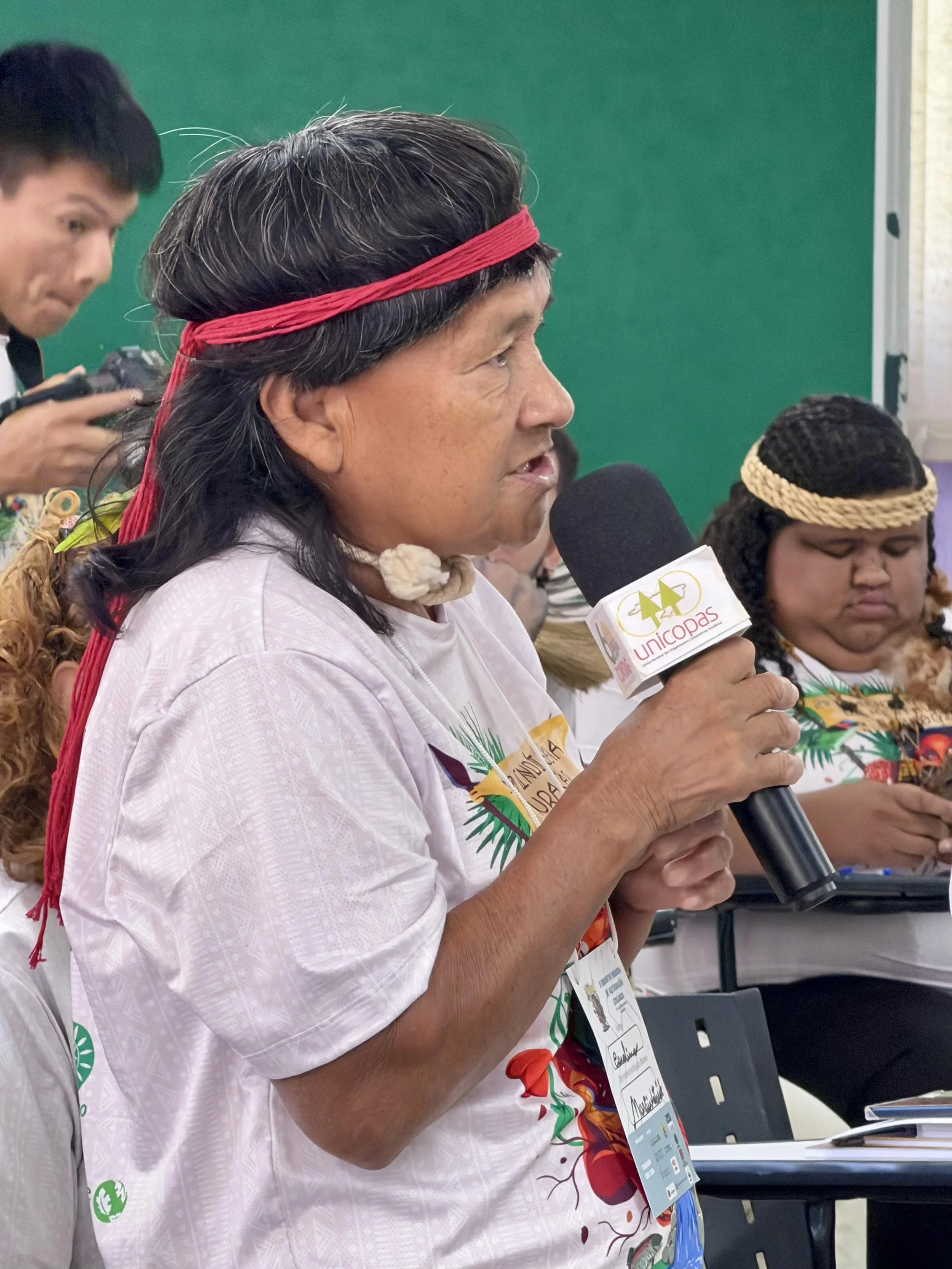
Figure 3. Carolina Rewaptu Xavante, woman chief of the Xavante people, from the Marãiwatsédé Indigenous Territory – one of the most degraded in Brazil, a reflection of a violent and cruel history of land exploitation – is one of the people who teaches me about the wind on the leaves. Photo: Lia Domingues/Xingu Seed Network
"In my village, we don't talk about restoration: we talk about ‘bringing the forest back’", I heard an Indigenous woman leader say on the very first day of the II Indigenous Meeting on Ecological Restoration (EIRE). Restoring is so natural for many of the Indigenous cultures that resisted and still resist in Brazil that, often, it doesn't even have a name.
By witnessing and sharing worldviews so different from my own, I understood that the expression "ecological restoration" is, for many Indigenous peoples, an empty, dead, weak term.
In it, there is no enchantment or spirit. "We bring the forest back because we need the trees to hear the wind beating on the leaves – for that is how the spirits are heard: the wind speaks for them. But it is not just any wind. It is the wind on the tree leaf", adds another woman chief, whose wisdom I always enjoy listening to.
2. The importance of naming things correctly
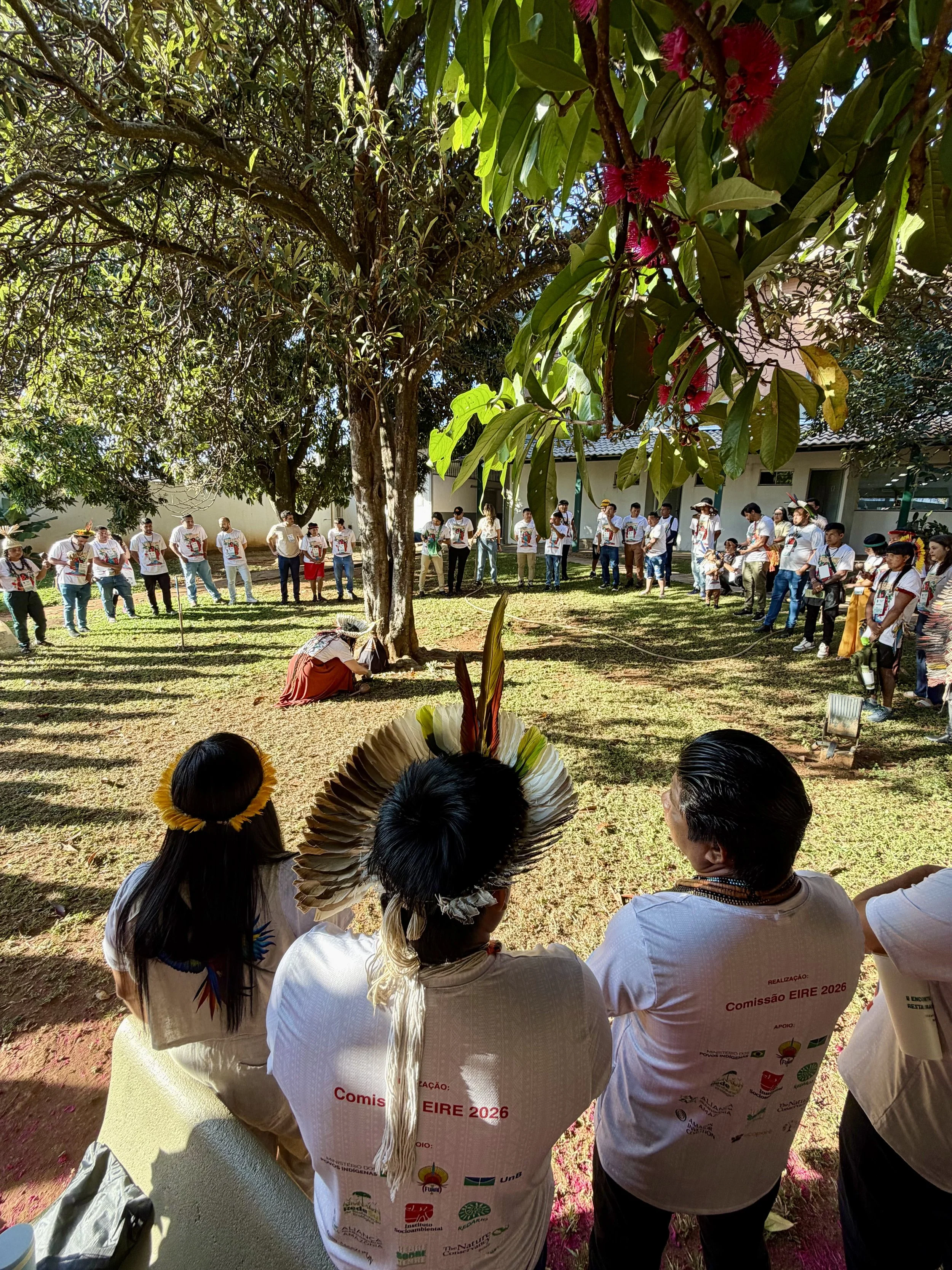
Figure 4. Re-enchanting the world – this may be one of the most important lessons to learn from Indigenous peoples around the world. Photo: Lia Domingues/Xingu Seed Network
When I was at the International Conference on Transition Away from Fossil Fuels, I heard a woman leader of the Kichwa people of Sarayaku, in Ecuador, Abi Gualingua, say that one of the ways her people resist is by naming things as they are.
At that moment, we were talking about how oil threatens Indigenous territories in the Ecuadorian Amazon – and she told me that, for them, oil has another name: it is the "blood of the Earth." In the same way, “natural resources” were called “relatives”: rivers, mountains, animals, trees, rocks, fire, wind… they, too, are living beings like us. Because we share the same common ground on this planet, we’re all part of a larger family. Everyone is equally important.
So, just as Abi Gualingua suggested I seek the correct name for things, participants of the II EIRE confirmed to me the importance of doing the same in restoration: Iran Xukuru, an inspiring leader from the interior of Pernambuco, reminds me how much we need an enchanted science to account for the full size of life.
"We don't do any restoration work: we live in this cosmic dance of life (...), inspired by the science of fireflies, following in gentilic wandering, stepping light and slow, being light in our own thinking. (...) The Caatinga [name of his biome of origin], for us, is an institution of teaching and learning – the elements that compose it, the birds and the trees, are alive and invite us to this process of walking, learning, teaching, and regenerating. (...) In this relationship with the Caatinga, we go through processes of de-formation: and in this de-formation, we become, from this sacred relationship with the forest, which is enchanted, incapable, incompetent, and inefficient in destruction – those who know do not destroy", tells him.
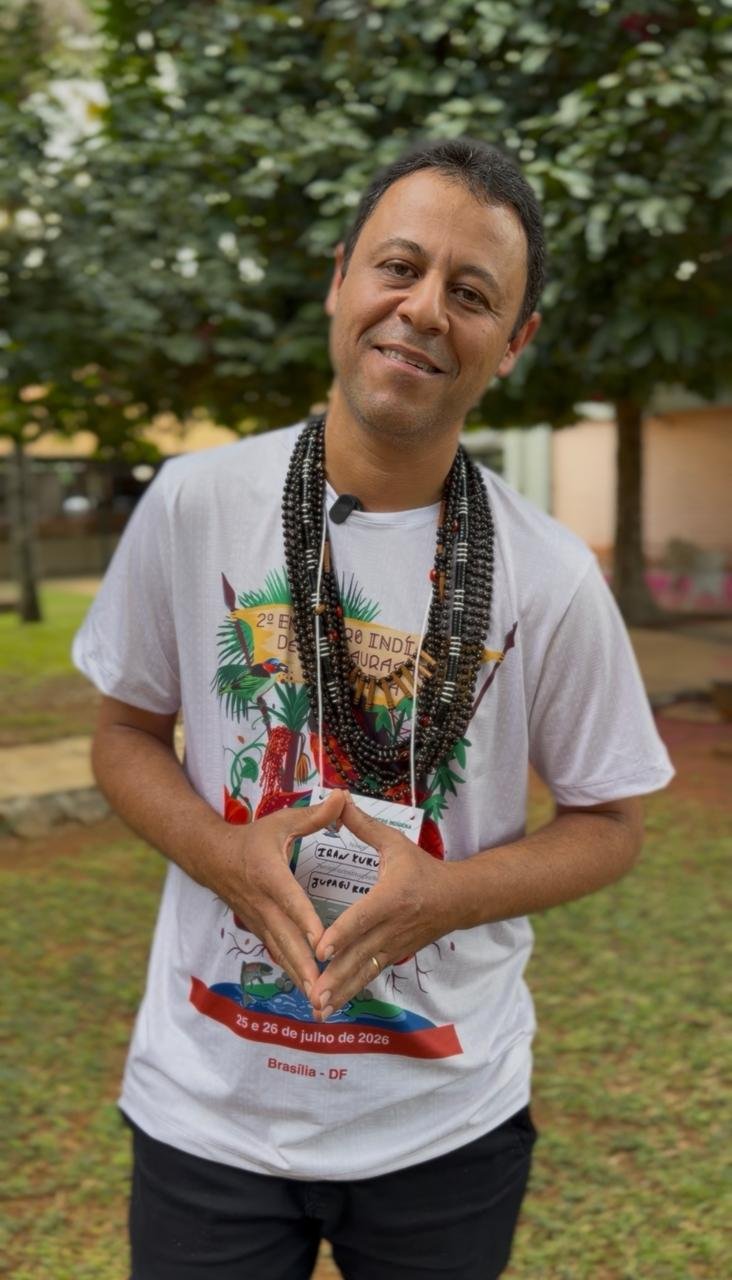
Figure 5. Iran Xukuru is an important Indigenous leader of the Jupago Kreká Collective, which promotes the restoration – and re-enchantment – of his territory in the Caatinga, the only semi-arid biome in all of Brazil. Photo: Lia Domingues/Xingu Seed Network
3. Traditional and technical knowledge walk well hand in hand
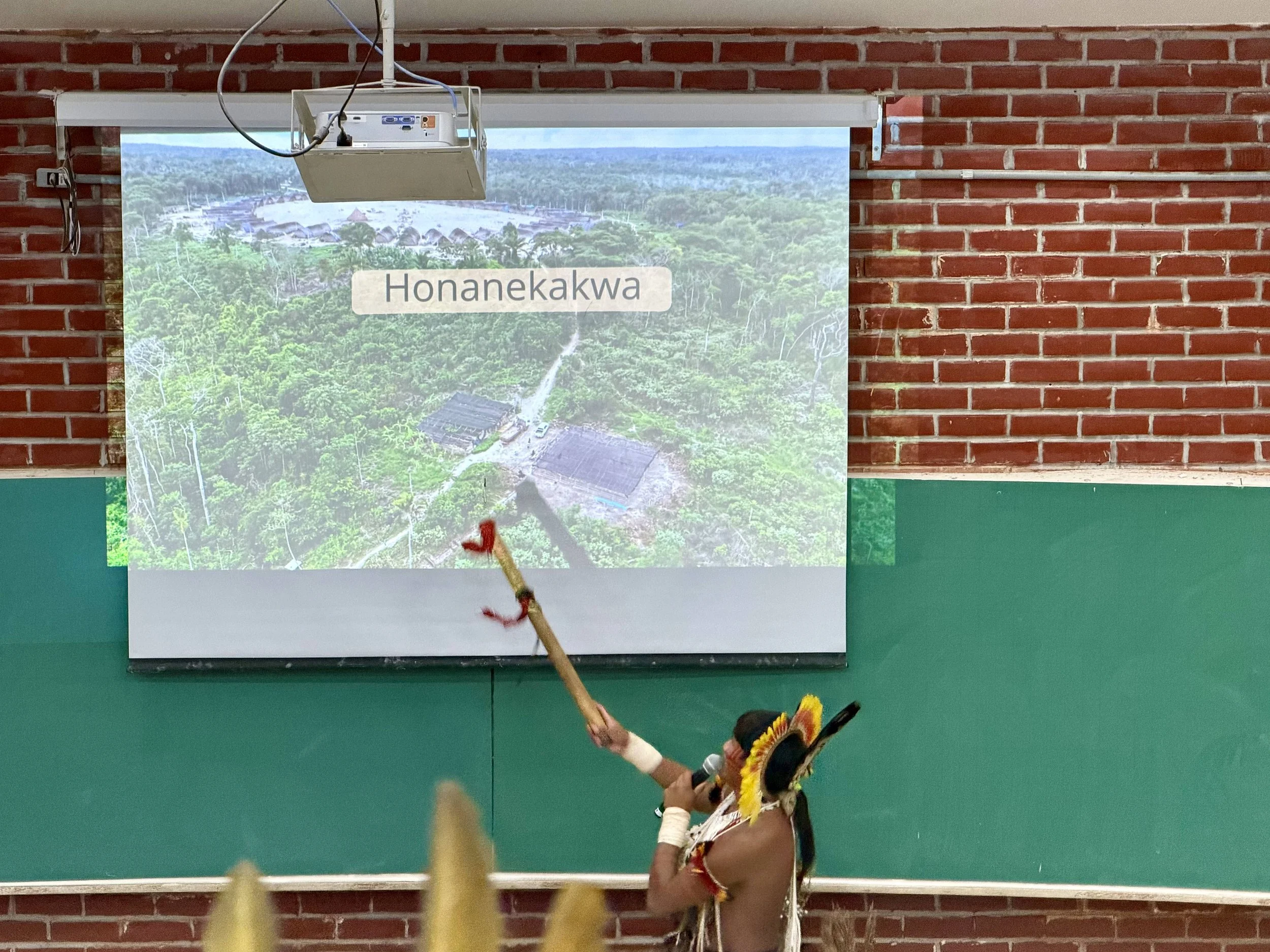
Figure 6. Presentation by the Enawene Nawe people at SOBRE2026: increasingly, Indigenous voices occupy formal spaces of knowledge production – "better late than never", it's worth repeating… Photo: Lia Domingues/Xingu Seed Network
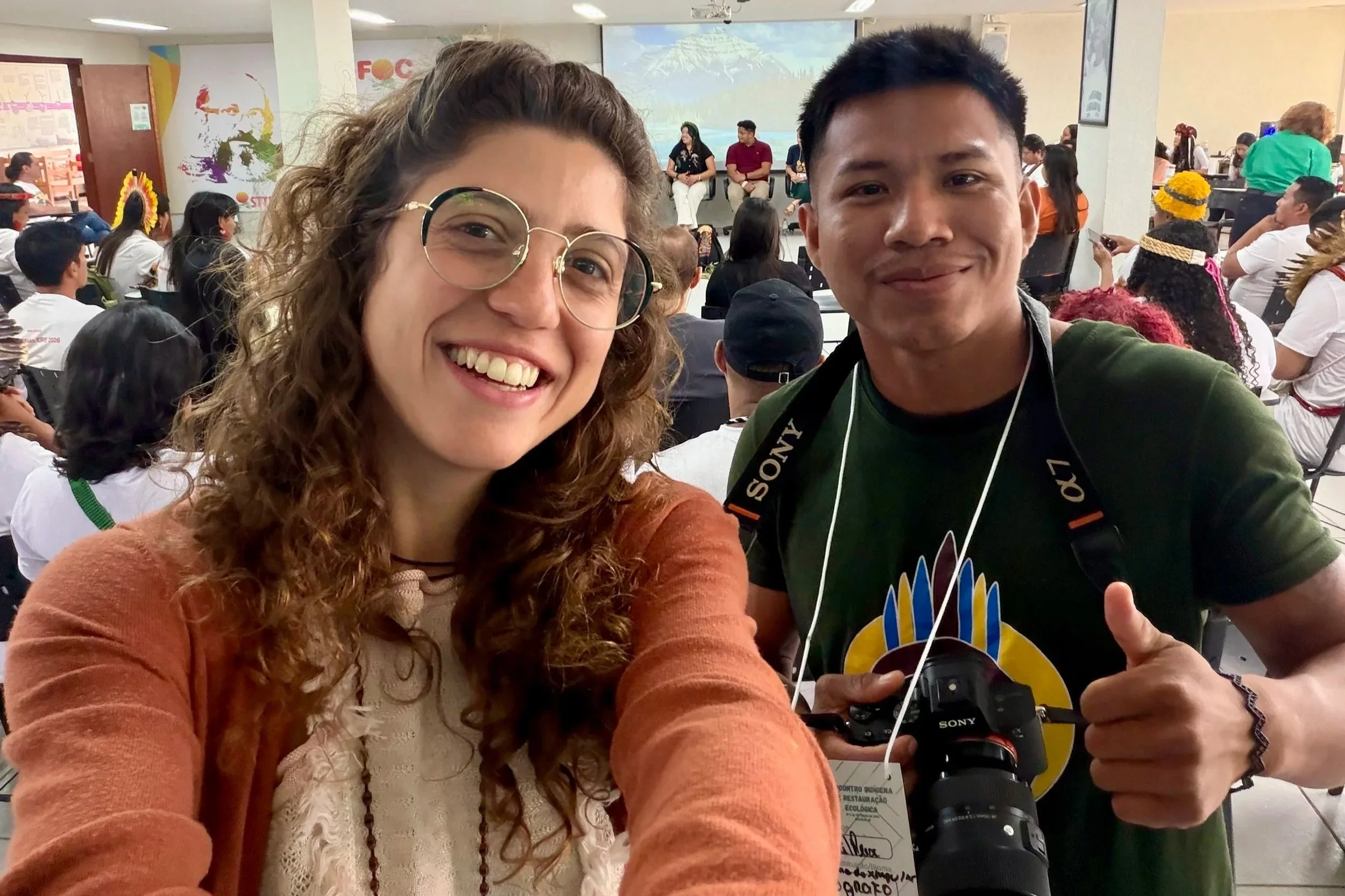
I also understood that the union between traditional knowledge and non-Indigenous technical knowledge walks very well hand in hand – and I experienced this in practice when I had the opportunity to carry out the official coverage of the event together with Marewi Juruna, a young Indigenous communicator from the Xingu Seed Network, the organization whose Communications I coordinate.
Marewi and I have been working together for over a year, since the XSN Young Communicators project began. But this was the first time we worked as a duo. It worked so well because our knowledge and perspectives complemented each other in a rich and fun way.
4. Indigenous peoples are our oldest restorers
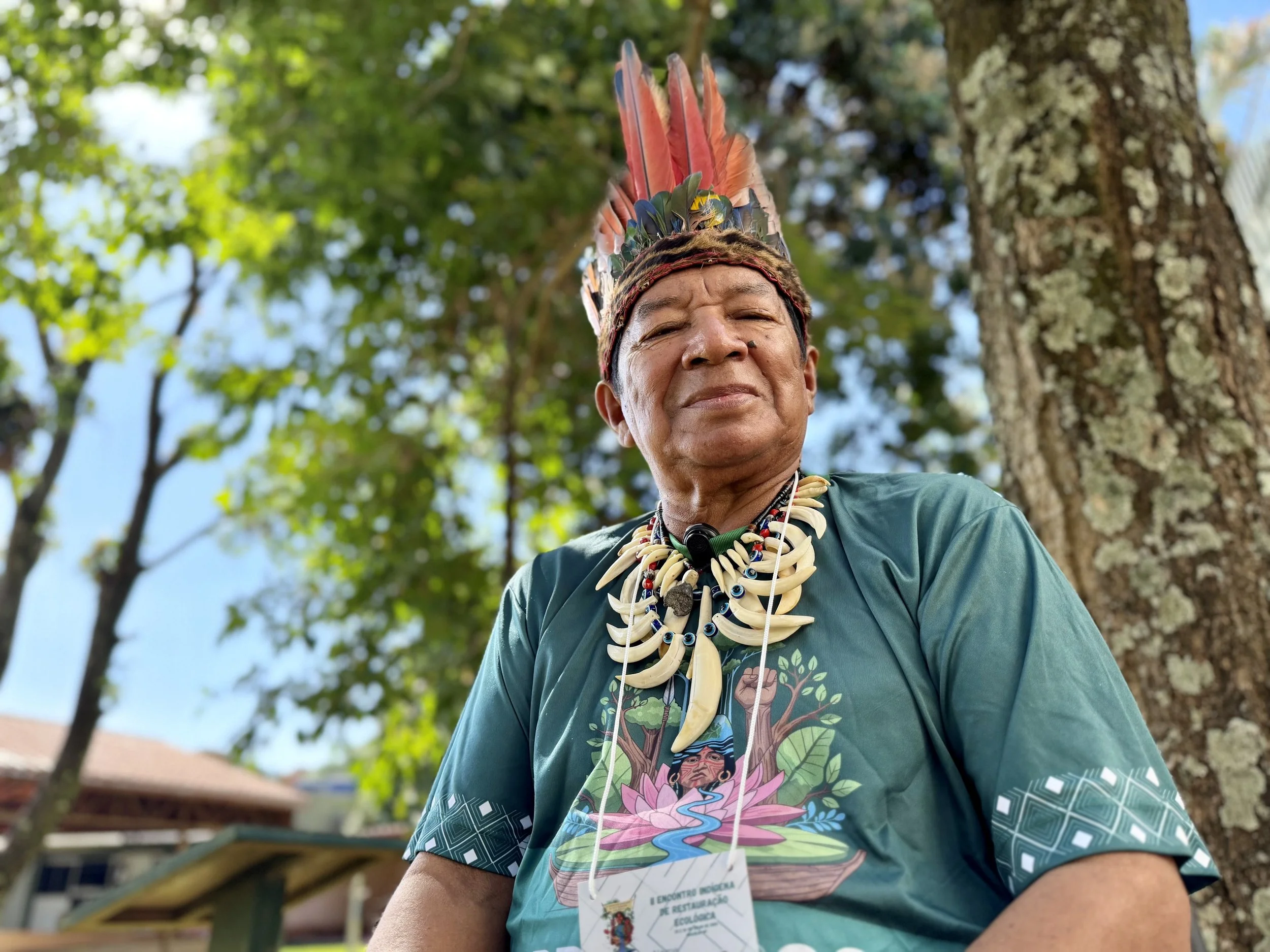
Figure 7. Marcelino Apurinã, Indigenous leader of the Caititu Territory, in the state of Amazonas, still remembers very well what Nature was like in his childhood, when he fished with his grandfather in abundant waters and the climate was cooler. Photo: Lia Domingues/Xingu Seed Network
Indigenous peoples are our oldest restorers: it is natural for these peoples to restore, even if there is no such word among them. Indigenous peoples have always restored their territories and the places they pass through. And it is precisely because of this – because they are such experienced restorers, bringing another matrix of knowledge to this field – and because we know that nearly 2 million hectares located in Indigenous reserves in Brazil are suitable for restoration, that we must include Indigenous communities in the more formal restoration agendas.
Brazil has committed to restoring 12 million hectares by 2030. Taking Indigenous territories into account to achieve this goal is highly strategic. And here, it is not enough to consider them in just any way: "We don't want to be project executors, but protagonists", I heard many, many times. Indigenous peoples are not cheap labor to implement restoration projects: they are strategists, formulators of ideas and concepts, world-builders, and deep connoisseurs of the territories they inhabit and the species that share these territories with them.
About the author
Lia is a Brazilian writer, journalist, and socio-environmental communicator with 10 years of experience in community-based and ecological initiatives. Currently, Lia is the Head of Communications at the Xingu Seed Network – Brazil's leading reference in community-based native seed collection for ecological restoration – and also a community fellow at MedLab CU Boulder and an ambassador for the International Network for Seed-based Restoration (INSR-SER). She’s also been a nomad-traveler since 2017.