
Written by: Marcello DeVitis, Sina Bohm, Andrew Kaul, Qiming Liang, Gabriele Vieira, Jill Wagner;
Reviewed by: Olga Kildisheva
Since its establishment in 2015, one of the core objectives of the International Network for Seed-based Restoration (INSR) has been to connect professionals, practitioners, scientists, and stakeholders working on seed-based restoration. By facilitating the exchange of knowledge and experiences, INSR aims to create a collaborative effort that will advance the field of seed-based restoration and ultimately have a positive impact on biodiversity conservation.
Since its inception, the network has grown and has been focused on ensuring the availability of key information to support native seed-based restoration worldwide. Some milestones include the production of the native seed film and the collaborative publications, such as the International Standards for Native Seed in Ecological Restoration, that became a reference in the field; and through organizing regular stakeholder engagement activities such as publishing a quarterly newsletter, organizing webinars, symposia, membership meetings, among others.
Even though INSR had gained recognition globally, its Board was aware that the network wasn't reaching all regions and local communities and a more targeted, grassroots approach was necessary to engage with these underrepresented groups. To address this need, INSR recently established an Ambassador Program. INSR Ambassadors are members who assist the Board in connecting with local communities in their respective regions. They do this by promoting the organization at local events and conferences and by sharing useful resources. Ambassadors also help regional and local stakeholders connect with the broader community by sharing their stories through the INSR's channels.
The INSR Ambassador Program launched in January 2025 and was fortunate to quickly attract interest from many members who wanted to become Ambassadors! We are excited to introduce our cohort of Ambassadors:
Marcello De Vitis
Marcello has been working on plant conservation and seed science with applications to restoration for more than a decade, conducting research and managing projects within botanic gardens, NGOs, and universities between Italy, the United Kingdom, and the Unites States, often working on projects with international breadth and impact. He served as a member of the INSR Board from 2017 to 2021 and he now serves as the Ambassador Program Lead. He is passionate about engaging communities, connecting people and leveraging efforts to advance knowledge and improve outcomes in plant conservation and habitat restoration. He currently works as a Conservation Officer at Botanic Gardens Conservation International supporting the implementation of The Global Biodiversity Standard, a site-based certification framework that recognises and promotes the protection, enhancement and restoration of biodiversity across multiple land uses and sectors. Marcello also sits on the Executive Committee of the recently formed Italian Network for Ecological Restoration.
Besides plants and conservation, he is passionate about hiking and playing volleyball.
Sina Bohm
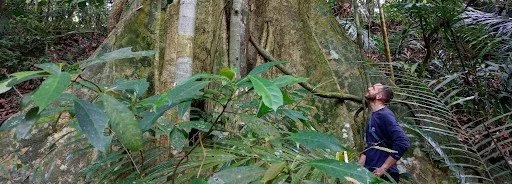
Sina has been working in the fields of seed banking and plant translocations over the past 6 years in the Netherlands, trying to discover the limitations that populations of threatened plant species are currently experiencing. She feels lucky to collaborate with a dedicated team of researchers and practitioners who share the aim of safeguarding and restoring viable plant populations and ecosystem processes in the Netherlands. In a recent study she completed, she explored the role of microbial inoculation in plant translocation success. While conducting her PhD, she was the curator of the Dutch National Seed Bank (Foundation Het Levend Archief) and she is continuing to work in (seed-based) translocations and restoration within her new position as vegetation and landscape researcher at Wageningen University. Sina is keen to take part in the INSR Ambassador Program to further develop her skills and knowledge in the fields of plant translocations and ecological restoration and to engage in knowledge transfer internationally.
Andrew Kaul
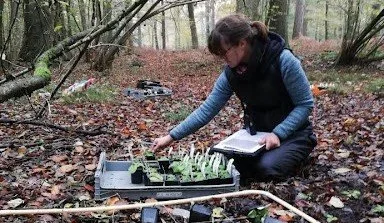
Andrew is a restoration ecologist in the Center for Conservation and Sustainable Development at the Missouri Botanical Garden, in St. Louis, Missouri, USA. He studies plant community ecology, focusing on restoration of Midwestern US prairies, and woodlands. His research provides actionable recommendations to improve restoration practice, broadly following four crosscutting themes: seed-based restoration, land management, invasion ecology, and socio-ecology of restoration. His seed-based research addresses why certain species are present in restored habitats and others are not. Native species found in high-quality sites may be lost along three transitions in the “seed-based restoration pipeline” if they are 1) not hand collected or sold by seed vendors 2) not included in seed mixes, or 3) if they do not establish when seeded. His work has documented what kinds of species (based on functional groups or traits) tend to succeed or fail across each of these transitions. In addition to SER, he is also a member of the Ecological Society of America, and the Natural Areas Association. He also mentors a student each year through the American Society of Naturalists’ EEB mentor match program. In his free time, he enjoys baking, running, and playing with his three cats.

Qiming Liang
Qiming is a program officer at WWF China, focusing on grassland conservation in the Hulunbuir steppe—known as one of the best natural pasture on Earth. His involvement with INSR began by translating the documentary Native Seed: Supplying Restoration into Chinese. In collaboration with Bingqin Shan, one of SER & INSR’s China contacts, he contributed to translating key restoration standards and organized outreach events across China. Qiming also worked to promote a native seed supply chain in the Yangtze River Delta, emphasizing local plant materials and nursery networks. He is exploring the potential of using native seeds in WWF’s grassland restoration work, particularly for wetlands, waterbird habitats, and as high-quality forage for traditional natural pastures. Native seeds are closely linked to the traditional knowledge and cultural identity of Indigenous and local communities, as highlighted in the documentary. Qiming believes this connection is vital for place-based, community-led restoration, and he hopes to align his work with INSR’s vision of “the right seed, in the right place, at the right time.”
Gabriele Vieira
Gabriele is currently involved in academic and technical work related to seeds and seed-based ecological restoration in her region. She primarily works with species from the Atlantic Forest, which predominates in the Southeast region of Brazil, but she also works with Cerrado species—the Brazilian savanna-like biome—since she lives in an ecotone where both ecosystems meet. Her main focus is on forest seeds, especially seed quality, germination, and vigor, with an emphasis on their use in ecological restoration through direct seeding (known in Brazil as 'muvuca'). For her final undergraduate project, she is working on making the tetrazolium test more objective, aiming to improve its reliability in evaluating seed viability and vigor. Gabriele participates in discussions and initiatives related to native species restoration and contributes to Brazil’s Native Seed Committee. Outside academic activities, she enjoys reading literature from around the world, learning new languages, exploring data analysis, and practicing handicrafts with seeds. She sees her journey as a process of learning and contribution, and she is excited to keep deepening her knowledge and engagement in seed-based restoration.

Jill Wagner
Jill Wagner has been a forester in Hawaii for 30 years. She started at the Amy Greenwell Ethnobotanical Garden as a horticulturalist for the garden, where she grew native Hawaiian species. She received a Bachelors Degree from the University of Hawaii in Ethnobotany. She has been conducting forest restoration projects for the State of Hawaii, Department of Hawaiian Homelands, The Nature Conservancy, The National Park Service, Kamehameha Schools and other private land owners. She has trained people in ecosystem restoration and nursery management for decades.
She started the Hawaii Island Seed Bank (HISB) in 2008, which saves native seeds for large landowners on Hawaii Island. HISB supports farmers throughout the State by also banking food crop seeds for the Hawaii Seed Growers Network. Crucially, it also serves as a model for small, regional seed banks, called Seed Arks.
Ms. Wagner trains people all over the world so they can save their native and food crop seeds to build regional resiliency. Seed Arks are off-grid, solar-powered seed banks that are built to keep seeds in the hands of the people. Ms. Wagner is dedicated to supporting seed banks and networks everywhere.
